


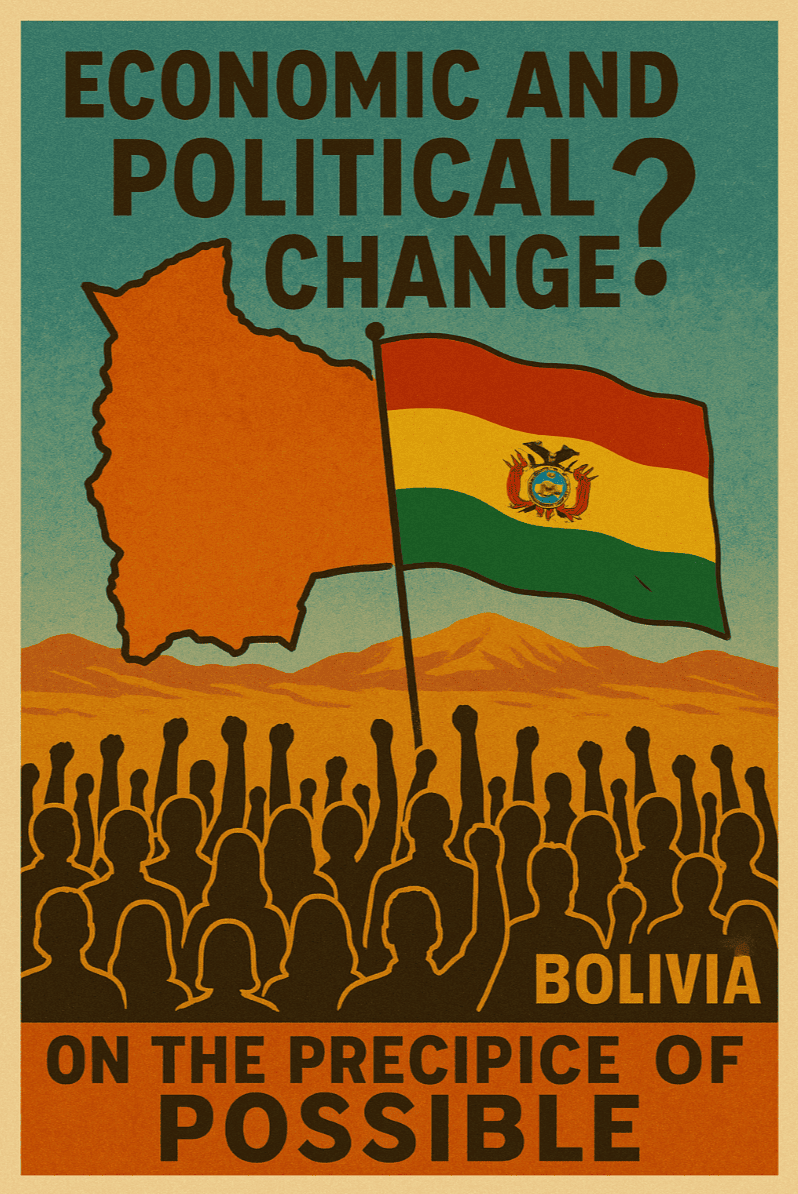
On October 19, Bolivians appeared to usher out more than two decades of dominance by the Movement for Socialism (Movimiento al Socialismo, MAS) and voted in a new president, Rodrigo Paz, who won the runoff with roughly 55 percent of the vote. In rhetorical contrast to MAS’s “Social Community Productive Economic Model,” Paz campaigned on “popular capitalism,” anti-corruption, and re-engagement with the United States. Yet, he lacks a legislative majority and inherits an economy in distress.
On October 19, Bolivians appeared to usher out more than two decades of dominance by the Movement for Socialism (Movimiento al Socialismo, MAS) and voted in a new president, Rodrigo Paz, who won the runoff with roughly 55 percent of the vote. In rhetorical contrast to MAS’s “Social Community Productive Economic Model,” Paz campaigned on “popular capitalism,” anti-corruption, and re-engagement with the United States. Yet, he lacks a legislative majority and inherits an economy in distress.
Skeptics question whether Paz’s reformist tone masks continuity. He hails from a political dynasty—his father, Jaime Paz Zamora, led Bolivia in the early 1990s under a pragmatic pact with former dictator Hugo Banzer. Today’s critics wonder whether Rodrigo Paz could strike a similar deal with Evo Morales and MAS to maintain elite control under new branding. If genuine, however, this transition could open a narrow window to restore investor confidence and reposition Bolivia at the heart of South America.
Bolivia’s political and economic outlook is precarious. After years of MAS’s “growth with social justice, not austerity” model—anchored in fuel subsidies, dependence on natural resource exports, and costly loans for underperforming mega projects—the economy now demands a reset. Mismanagement of this ambitious yet unsustainable model has left reserves depleted, the exchange rate rigid, and investor confidence eroded.
MAS’s successor government faces the hangover of populism without its revenues. The outgoing administration’s rigid currency peg and declining hydrocarbon output compounded structural imbalances. As the IMF warns, Bolivia’s economy is “unsustainable” under current policies. Paz’s challenge is whether he can break from this trajectory without triggering unrest.
From an investor’s standpoint, Bolivia’s macro starting point is unforgiving. By late 2025, international reserves hovered around $100 million, one of the lowest levels in the region. Dollar scarcity has spawned a wide parallel exchange rate and a thriving black market, distorting prices and profits across the economy.
Bolivia’s export-led model, once buoyed by natural gas, is collapsing under decades of overexploitation, underinvestment, and distorted incentives. Fuel prices remain artificially low for political reasons, undermining fiscal balance. Hydrocarbon revenues—long the backbone of Bolivia’s fiscal model—are now a fraction of early-2000s levels.
The IMF’s 2025 Article IV report warned of an imminent balance-of-payments crisis if subsidies and rigid currency management persist. The U.S. State Department noted the black-market dollar traded at roughly twice the official rate, signaling pervasive financial stress.
Bolivia’s fuel subsidies are its fiscal albatross. For two decades, successive governments financed political legitimacy through cheap fuel, creating a subsidy bill in the billions of dollars. While popular, this system is untenable: it drains reserves, widens the deficit, and discourages investment. Social programs and inclusion for the sake of popularity rarely encourage the gains needed to provide real pathways to greater prosperity for the target population.
A credible stabilization plan will require gradual subsidy reform, paired with targeted protections for the poorest households. Any abrupt fuel price adjustment risks street protests, while inaction perpetuates fiscal collapse. Paz must strike a careful balance—cut too quickly and he faces social upheaval; move too slowly and Bolivia runs out of dollars. Either scenario could define his presidency.
Paz’s rhetoric has raised cautious optimism abroad. His platform promises market pragmatism with social safeguards: phasing out the fixed exchange rate, reforming subsidies over time, prioritizing anti-corruption, and rebuilding external partnerships—without “shock therapy.”
Yet execution is everything. Governing without a congressional majority means compromise, patience, and pragmatism. The pace of reform will hinge on coalition arithmetic—how quickly enabling laws move through Congress and whether he can forge alliances beyond his party.
Bolivia’s growth will remain subdued through 2025 as foreign-exchange and fuel-price adjustments ripple through the economy. Inflationary pressure should ease only after credible policy gains. If Paz delivers a multi-year fiscal plan, normalizes the exchange rate, and rebuilds reserves, investor sentiment could shift by late 2026—particularly in lithium, midstream energy, logistics, and infrastructure.
Still, unlike neighboring Argentina, Bolivia cannot rely on generous external lifelines. Its credibility must be earned domestically. Unrealized reforms or populist reversals would spell the collapse of investor confidence and rekindle social unrest reminiscent of the early 2000s.
Legislative dynamics: Without a majority, even modest reforms will require cross-party alliances. Committee assignments and the first budget proposal will signal whether consensus is possible.
Re-engagement with the U.S. and multilaterals: Concrete governance reforms could unlock fresh financing, but symbolic gestures alone won’t suffice.
Sequencing reforms: Abrupt subsidy cuts could spark protests; careful sequencing and compensatory transfers are essential.
Contract sanctity in lithium and hydrocarbons: Court challenges and Indigenous consultation standards will test investor protection frameworks.
Bolivians have demanded change—through the ballot box, not the streets. Compared to the turmoil surrounding Morales’s exit in 2021, this transition is democratic and measured. The question is whether Paz’s administration can maintain that calm while delivering real reform.
For investors, cautious optimism is warranted. Markets crave stability, transparency, and consistent policy. Bolivia has little room for error. If Paz can deliver credible fiscal consolidation, a realistic subsidy glide path away from gas dependency, and transparent public-private partnerships in lithium and infrastructure, Bolivia could finally turn “potential” into sustained progress.
But if the new administration falters—if coalition politics, populist backsliding, or social unrest derail reforms—then the answer to Bolivia’s perennial question will be clear: it will indeed be “MAS de lo mismo.”